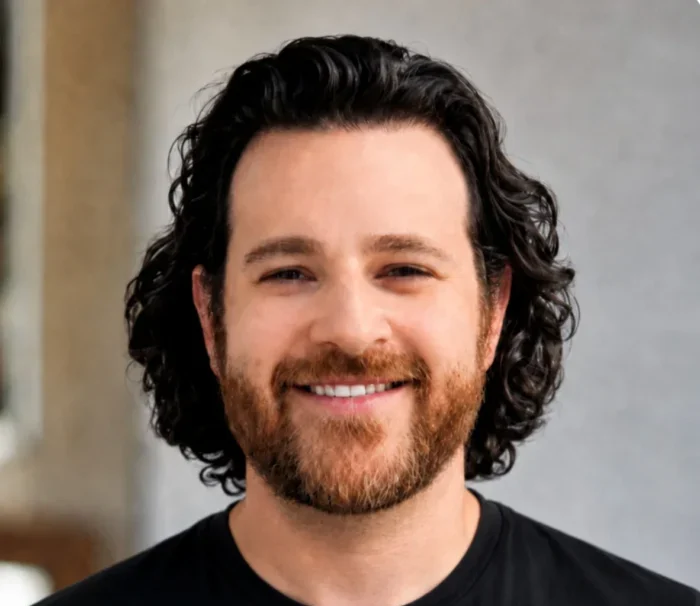
Nick Lanoil was nine years old when his grandmother gave him a panini press for the holidays. He calls it the greatest gift he’d ever received. Most kids that age want a video game console. Lanoil wanted to make sandwiches, and from there, he never really stopped chasing flavor — through catering kitchens in Napa and Sonoma, a Silicon Valley sales floor, a detour into Web 3.0, and now into a company built entirely around the people he considers the real stars of this industry: chefs.
Lanoil, based in Los Angeles, is co-founder of Maverick Culinary, a talent agency for chefs that connects them directly with emerging food and beverage brands looking for a way into foodservice. Alongside co-founders Allyson Murphy, a distribution veteran with a data and analytics background, and Daniel Asher, a James Beard-recognized chef and restaurateur with five restaurants across the Denver region. Lanoil and team are building a collective that now numbers close to 20 chefs, with roughly a hundred more in the pipeline through culinary school alumni networks and distribution partners who are training their own sales teams on the Maverick model.
Learning to Skip Steps
Lanoil’s path into foodservice started as a side hustle. A volleyball league he refereed in college connected him to a caterer serving Bay Area tech companies — a chance encounter that turned into a job the moment Lanoil offered the man a ride home and asked, on the spot, if he was hiring. He woke up the next morning in the caterer’s commissary kitchen and started cooking. By 21, he was running the company, doing nearly $700,000 a year in revenue, while the owner staged at Alinea under chef Grant Achatz.
That willingness to jump in before he felt fully ready traces back further, to a martial arts test as a kid. Asked which belt he was testing for, Lanoil skipped past the expected answer and said orange — two levels ahead of where he was supposed to be. He passed. It’s a story he still uses to describe how he operates today. There’s a difference between skipping steps and being prepared and excited to jump ahead when you already have the right foundation, he says. That distinction — preparation versus recklessness — has taken him from catering trucks to enterprise tech sales at ZeroCater, where he closed some of the largest deals in the company’s history, and eventually back into food again and again, no matter how many times he tried to leave it behind.
What Consolidation Costs
Ask Lanoil what’s broken in foodservice today and he doesn’t hesitate: consolidation. When a small number of major distributors control the bulk of what reaches a restaurant’s back door, he argues, they end up setting the pace for everyone — and that pace tends toward the cheapest common denominator. Restaurants that once pressed their own fries or built desserts from scratch quietly give that up as costs rise, and the result is a lot of menus that all taste the same.
Co-founder, Daniel Asher, made the point visually at a recent event in Boulder, plating two versions of the same Caprese salad side by side. One used commoditized ingredients — blended olive oil sourced from four or five countries, tomatoes gassed for shelf life, cheese of unclear origin. The other used products Maverick’s chefs had discovered through the platform: a persimmon vinegar from Santa Barbara-based Figure Eight, heirloom tomatoes from a farm a few miles from Daniel’s house, basil selected specifically for the dish. The difference, Lanoil says, was obvious before anyone took a bite — and it’s exactly the gap Maverick was built to close.
Putting Chefs at the Center
Maverick’s model flips the usual brand-to-restaurant relationship. Instead of chefs discovering new products by chance or through a distributor’s limited catalog, Maverick pays them to test emerging brands and give feedback, pays them again for content when a partnership makes sense, and offers rebates when a tested product earns a permanent spot on the menu. Brands get direct access to a curated network of working chefs. Chefs get new revenue streams and, just as important to Lanoil, a genuine say in what ends up on their line.
It’s a philosophy he sums up simply: any partnership worth doing should make one plus one equal three, not two. If a deal doesn’t create something bigger than what either side had alone, he says, there’s no real reason to do it.
Advice for the Next Generation
Lanoil’s advice for anyone entering the industry starts with curiosity. Ask good questions. Learn the people and the products, not just the process. Growth only happens outside your comfort zone, he says, so make the cold call, try the new sauce, put something in the jar — because if you don’t do it, no one’s going to do it for you.
It’s the same instinct that had him testing for an orange belt as a nine-year-old and trading a car ride for a catering job at 21: prepare seriously, then move before you’re entirely comfortable. Between Maverick’s growing chef collective and the brands lining up to reach it, that instinct looks like it’s paying off again.
Maverick Culinary – Built by operators. Led by chefs.
Maverick was founded to provide the foodservice industry with solutions designed by those who understand its unique challenges. Many existing tools, marketing strategies, and networks are created by individuals without direct experience in the field. We offer a different approach because we have firsthand experience in the industry.
Learn more here.