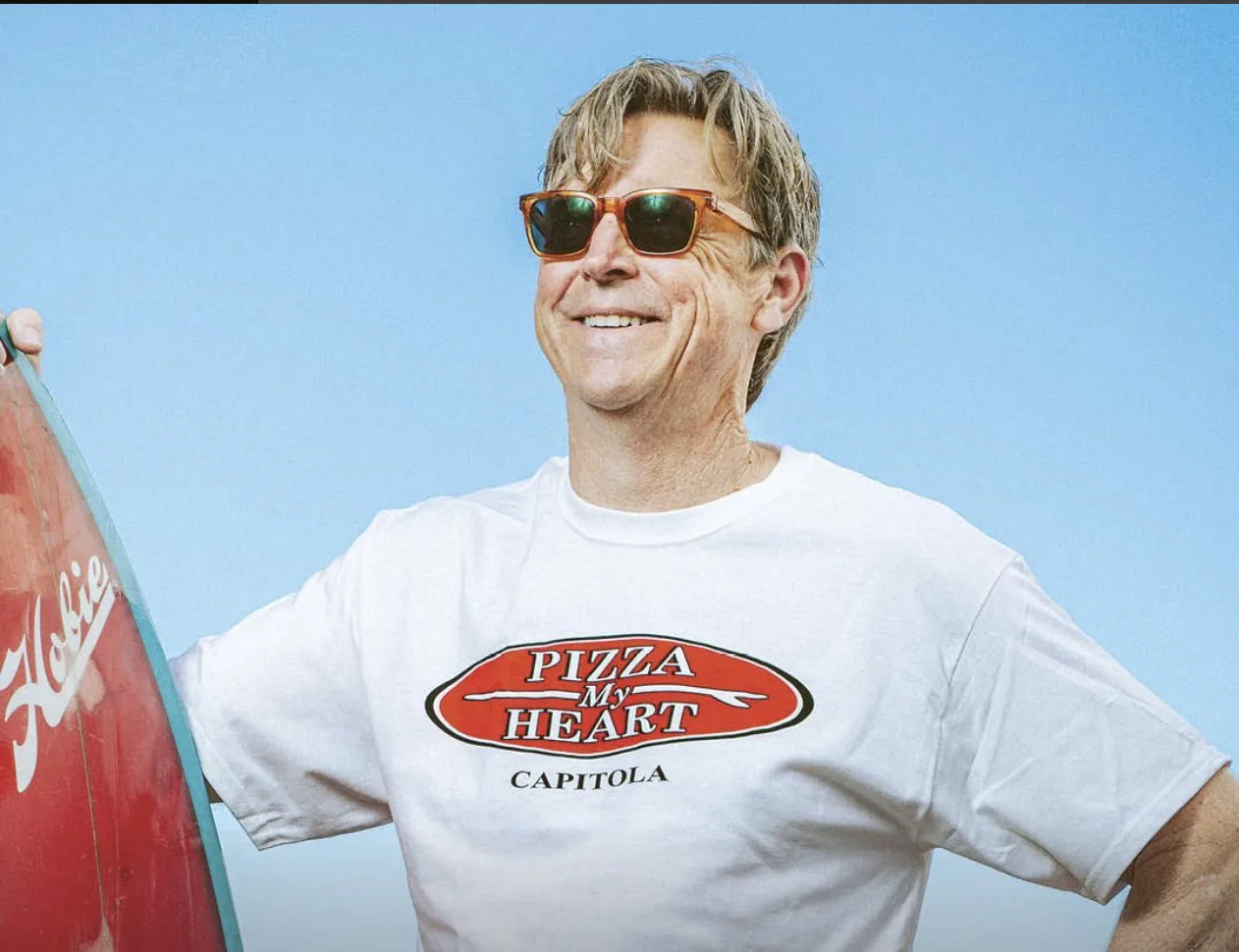
Chuck Hammers, President, Pizza My Heart — 31 locations across the San Francisco Bay Area
Chuck Hammers didn’t know how to make a pizza when he signed a lease on an empty storefront in downtown San Jose. He didn’t even have real restaurant experience — just a geophysics degree from Berkeley, a $3,000-a-month lease, and a trade he’d worked out with a friend: a windsurfer, exchanged for a summer’s worth of intelligence on how another pizzeria sourced its ingredients and built its dough.
That was 1986, and the shop he opened, Pizza A Go-Go, was the start of what is now Pizza My Heart, a 31-location chain across the Bay Area that Hammers, as President, still runs today. Most restaurant chains grow through franchising. Hammers owns all the stores and states emphatically; “I will never franchise.”
The origin story sets the tone for everything that follows: opportunistic, self-taught, and built on paying close attention to people.
Hammers traces his path back to a summer job computerizing his brother-in-law’s shoe store, where he watched three former partners go on to found Ross Dress for Less, Natural Wonders, and Keen Shoes. If they could build something from scratch, he figured, so could he. He picked pizza by the slice because no one on the West Coast was doing what he’d seen done well in New York, except Blondie’s in Berkeley.
Growth came in fits and starts — a second store in Palo Alto eighteen months later, then, in 1997, the acquisition that gave the company its name. A struggling, Santa Cruz, two-store chain called Pizza My Heart was for sale, its owner claiming strong sales despite steep annual losses. The name and surfboard motif came from this.
Hammers spent weeks watching the restaurant before closing escrow and quickly discovered the real story: extensive theft was draining the business. Overnight, he replaced the point-of-sale system and the entire staff, except one person. Sales jumped 35% the very next day. He kept one employee, Leah Scurto, who was with Pizza My Heart for 22 years. Leah, by the way, has gone on to be very successful pizzeria operator who is nationally and internationally recognized.
“Build on your strengths, don’t worry about your weaknesses,”
That kind of clarity — trusting what he could see rather than what he was told — has stayed central to how Hammers runs the company. It shows up most clearly in his marketing philosophy. “Build on your strengths, don’t worry about your weaknesses,” he says. Rather than pour money into fixing a slow Monday, he’d rather invest in making a strong Friday stronger, because the return is so much higher. That thinking led him to focus relentlessly on families, kids, and moms — and to the free school field trips that have become a signature of the brand. What started as a favor for his sister’s canceled kindergarten trip has grown into more than a thousand tours a year, each one ending with a kid who made his own pizza, wore a Pizza My Heart shirt home, and picked the restaurant for family pizza night the following week. On the shirts, Pizza My Heart boasts over 4,000,000 shirts sold.
Culture is the other pillar. Hammers borrows a line from restaurateur Norman Brinker: “We’re not in the pizza business; we’re in the people business serving pizza.” It shows in the numbers — an average employee tenure of 4.7 years in an industry where six months is typical, and not a single outside manager hired in more than fifteen years. Every manager at Pizza My Heart came up through the ranks. Hammers credits an unusual policy for part of that loyalty: the company doesn’t cap overtime, which keeps its best cooks around long enough to cross-train between locations and hold every store to the same standard. “If you can walk into any Pizza My Heart and get the exact same slice, that changes everything,” he says.
On advise about getting into the pizza business. “You have to know what you are doing today, I learned as I went, that won’t work today. Work for someone you respect before starting out on your own.”
Fifteen years from now, Hammers isn’t picturing a cliff. He’s spent the past year handing more authority to a team he trusts completely, building a business that can run without him in the room so he can travel and still stay involved. What he wants most is simple: for the brand to outlive him. Given how deliberately he’s built it — one store at a time, one hire at a time — that seems like a safe bet.
Thanks for sharing your story, Chuck.